Tuesday, 27 January 2026
Key Highlights
By: Zacharia Jalloh, Ministry of Information and Civic Education
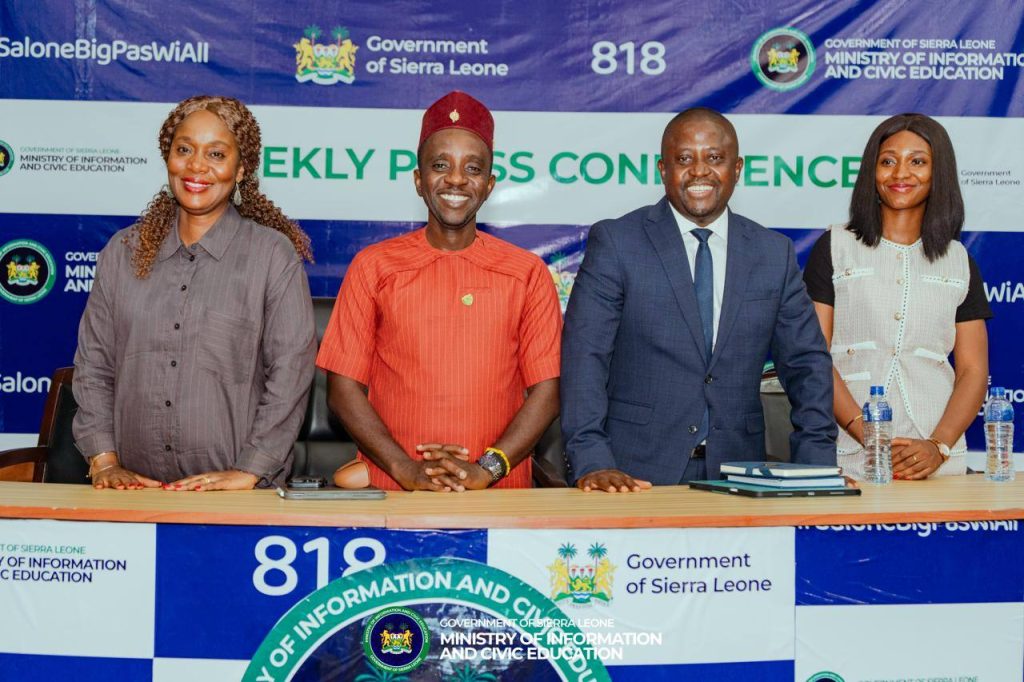
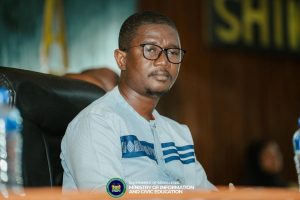
 The Minister of Information and Civic Education, Chernor Bah, disclosed that this is the first time a third-term conversation has not emerged in the country. He attributed this to President Bio’s firm commitment to democratic principles, particularly his respect for the constitutional two-term presidential limit. The Minister emphasized that President Bio has made it abundantly clear that a third-term agenda will not be tolerated. He further stated that the Constitutional Review Process is intended for the benefit of the people and the nation, not for any political party. Additionally, Minister Bah explained that the Bill presented to Parliament by the Attorney General focuses primarily on election-related matters, while other constitutional reforms requiring a referendum will be presented subsequently.
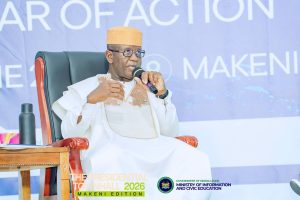
The Attorney General and Minister of Justice, Alpha Sesay Esq., provided a historical background to justify the need for a new constitution. He stated that the 1999 Lomé Peace Accord agreed upon by the Government of Sierra Leone, the RUF, and international partners recommended a review of the 1991 Constitution to prevent retrogression. He also referenced the Truth and Reconciliation Commission (TRC) Report, which similarly recommended a constitutional review. These two significant national documents, he noted, form the foundation of the nation’s pursuit of a new constitution that reflects the will of the people.
The Attorney General informed the public that, in response to these recommendations, the government of the late President Dr. Ahmed Tejan Kabbah established the Peter Tucker Constitutional Review Committee to review the 1991 Constitution. This process continued under former President Dr. Ernest Bai Koroma, who constituted the Justice Cowan Constitutional Review Committee. He clarified that under the leadership of President Bio, the government is implementing the recommendations of the Justice Cowan Committee, with a few Modifications.
The Attorney General provided statistics on the work of the Justice Cowan Committee, revealing that over 10,000 consultations were conducted nationwide; more than 150 position papers were received from various sectors of society; over 80 expert engagements were held on key constitutional issues; more than 180 direct engagements took place with diverse groups to address critical concerns; over 70,000 forms were distributed across the country; more than 20,000 hours of radio and television engagements were conducted; and the committee’s website recorded 40,960 visitors. The committee submitted its report in 2017 to former President Koroma, and the first government White Paper was issued in June 2017.
The Attorney General further explained that modifications to the 2017 Government White Paper were made to accommodate justiciable rights, including women’s rights, healthcare, and education, to be embedded in the new Constitution. In addition, recommendations from the Tripartite Committee were incorporated into the constitutional review process to better reflect the will of the people.
The Attorney General provided brief explanations of some proposed provisions in the new Constitution. He stated that the President and Vice President cannot be automatically removed from office solely for losing their party membership. Instead, any removal must strictly follow the procedures outlined in Section 51 of the 1991 Constitution. Another proposed provision is the adoption of the Proportional Representation (PR) system, which the government accepted from the Justice Cowan Committee’s recommendations. He noted that the PR system is cost-effective, revealing that between 2023 and 2025, the government saved approximately Nle20million by avoiding bye-elections, with the funds redirected to sectors such as education, health, and agriculture.
The Attorney General also informed the public that both the Tripartite Committee and the Constitutional Review Committee proposed reducing the presidential election threshold from 55% to 50% plus one. An additional amendment requires a candidate to secure at least 20% of votes in two-thirds of the voting districts to ensure national appeal. Another progressive proposal allows independent candidates to contest the presidency, provided they are not members of any political party and can demonstrate strong national and community appeal.
The Minister of Fisheries and Marine Resources, Princess Dugba, announced that in 2025 the ministry generated Nle163million, an increase from Nle150million in 2024. She expressed the ministry’s commitment to further boosting revenue in 2026.
Minister Princess Dugba also announced the fishing closed season for the artisanal fisheries subsector, effective from 1 February to 28 February, aimed at preserving fish stocks and increasing fish production.
Mariama Jalloh, National Director of the Young Women in Governance Network, added her voice to the Constitutional Review Process by advocating for clearly defined women’s rights in the new Constitution. Her advocacy includes pay equity, a 30% quota for women regardless of the electoral system, access to social investments such as education and healthcare, and increased youth participation in national development. She commended the progress made so far and called for a transparent review process.