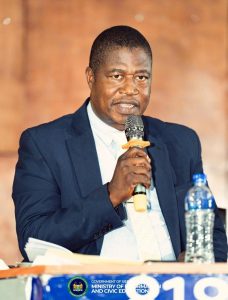
By Mohamed Jaward Nyallay
Strategic Communications Adviser, Ministry of Information and Civic Education
Twenty-two years after Sierra Leone returned to elected local government, the jury is still out on one important question: has decentralization delivered the kind of governance transformation we imagined when we decided to revive it?
The question is not an indictment of the system. If anything, it is a recognition that decentralization is a long institutional project. In a post-war country like Sierra Leone, its logic was always compelling. The idea was that government would become more responsive when citizens could participate closer to where they live, and that local institutions could help rebuild the legitimacy of the state.
Bardhan and Mookherjee, in Decentralization and Local Governance in Developing Countries, make this case quite well. Decentralization, they argue, can expand political space, improve accountability and encourage citizen participation in public affairs, thereby strengthening state legitimacy.
But there is a second part to the argument that is sometimes missed: decentralization only works when the institutions closest to citizens are empowered to function.
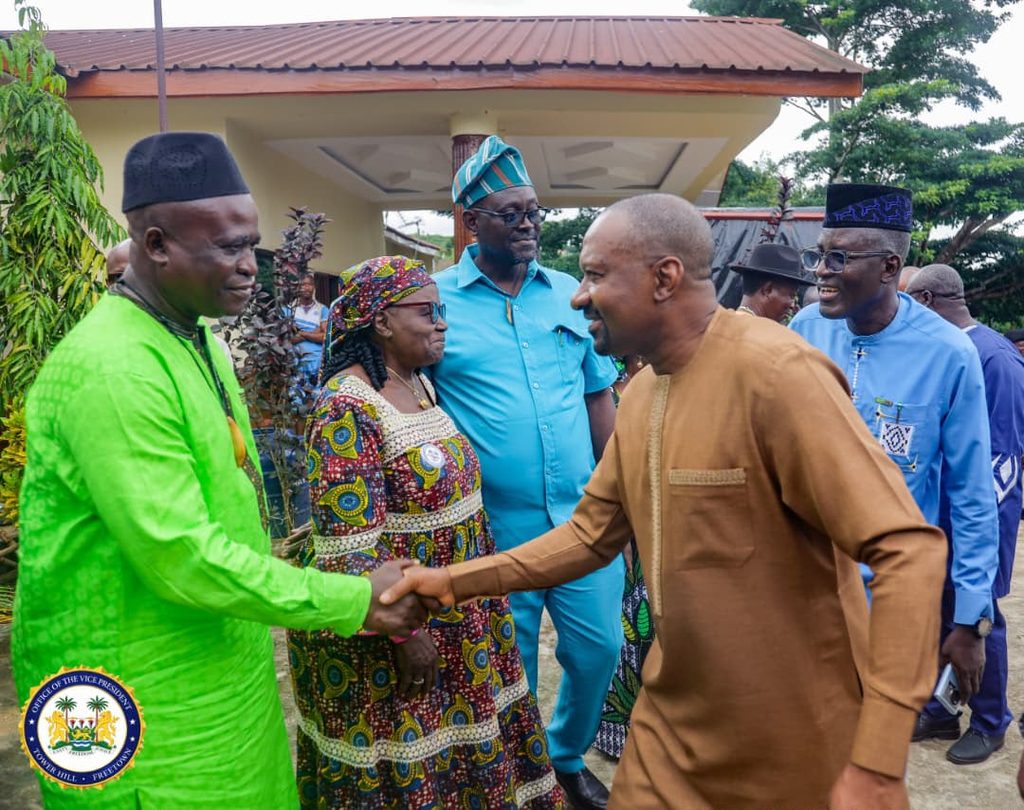
That is what made Vice President Mohamed Juldeh Jalloh’s recent engagement with local councils particularly important.
The tour was not simply another government visit to the districts. It was an opportunity to listen to the people running the machinery of local governance, understand what is working, identify where the system is struggling and think through how central government can make decentralization more effective.
There was something refreshing about the approach.
Rather than beginning with a list of instructions from Freetown, the conversation began with listening.
And five things stood out:
1. Listening is a serious instrument of governance
In government, listening can sometimes be mistaken for courtesy.
It is much more than that.
For a Vice President sitting with mayors, chairpersons, Paramount Chiefs and local administrators, the value is not simply in hearing their grievances. It is in acquiring a different kind of information — information that is generated from the point where policies actually meet citizens.
A policy may look perfectly sound from Freetown. Its implementation can look very different in a district like Falaba.
Local authorities know where the pressure points are. They know which services are struggling, which communities are growing rapidly, where infrastructure is inadequate and where the gap between policy and implementation is widest.
That local knowledge should matter to national policy-making.
The Vice President’s engagement therefore demonstrated something important: governance is also a process of information gathering.
The centre needs the districts as much as the districts need the centre.
When local government speaks and central government listens, national policy becomes better informed by the realities of implementation. That is not merely good politics. It is good public administration.
2. Respect between central and local government is reciprocal
There is an interesting tension at the heart of decentralization.
Local councils have responsibilities that affect citizens directly, but they operate within a national system in which central government remains responsible for policy, financing and, in many cases, the completion of devolution itself.
This means decentralization cannot be understood simply as “Freetown giving power to the districts.”
It is better understood as a negotiated distribution of authority.
Some responsibilities have been devolved, while others remain incomplete. In some instances, responsibilities have moved without sufficient resources following them.
That creates a familiar problem in public administration: you cannot easily hold an institution accountable for delivering a function if it does not have the authority or resources to perform it.
This is why the Vice President’s decision to engage directly with local authorities matters.
Listening to local government is an acknowledgement that these institutions are not merely implementing arms of central government. They are important democratic institutions in their own right.
And respect in governance works both ways.
The centre must support local government to perform. Local government, in turn, must demonstrate that it can use the authority and resources entrusted to it responsibly.
That symbiotic relationship is fundamental to making devolution work.
3. Sustainability could become the next big test
There is a less obvious challenge facing decentralization: success itself creates new demands.
As populations grow, towns expand. Places that once had relatively modest needs begin to look and function like major urban centres.
The demand for waste management, drainage, roads, markets, health facilities, sanitation and public spaces grows with them.
But local revenue does not always grow at the same pace.
This raises a difficult question: how do we build local governments that are financially sustainable enough to meet the needs of increasingly demanding populations?
This is one of the issues that deserves much more attention.
Central government transfers will remain important, but a sustainable local government system will also require stronger local revenue mobilisation, better financial management, improved planning and greater economic activity within localities.
The Vice President’s engagement helped bring this issue to the fore.
As someone who is interested in local governance delivery, I have always believed that, the future of decentralization will not only depend on how much authority we devolve. It will also depend on whether we can build the fiscal and institutional capacity to sustain that authority.
4. Government does not have all the answers
Perhaps one of the most important lessons from the tour was that solutions do not always have to come from the center, they can come from the base too.
This is one of the fundamental ideas behind decentralization.
The people closest to a problem often have the clearest understanding of how to solve it.
A council may have developed a better approach to waste management. Another may have found a more effective way of mobilising local revenue. A third may have developed a more meaningful way of involving citizens in local decision-making.
These are not isolated experiments. They are potential lessons for the wider governance system.
The role of central government should therefore not always be to prescribe.
Sometimes it should be to listen, identify what works and create the conditions for those solutions to be scaled.
In that sense, local government can become a laboratory for governance innovation.
This is one of the reasons the Vice President’s engagement was important. It created space for local experiences to feed into the national conversation.
5. There is still reason to believe in decentralization
After 22 years, it would be easy to focus only on what has not worked.
But that would miss the bigger picture.
Sierra Leone has rebuilt a local government system from the ashes of the civil war. Councils now form part of the country’s institutional architecture. They provide a critical channel through which citizens interact with the state and through which government delivers services at the last mile.
The system is not perfect.
But institutional development is rarely linear. There are still challenges around capacity, resources, accountability and the completion of devolution. Yet there is also evidence that the system can continue to evolve.
This is where political leadership becomes important.
The Vice President’s tour was significant not because it solved all the problems of local government in one engagement. It could not.
Its value was in recognising that the problems are worth listening to, discussing and solving.
There is something inherently democratic about that process.
Fareed Zakaria said last week on his GPS program on CNN about democracy; democracy is not designed for speed, it is designed for legitimacy. It consults, bargains, compromises and balances competing interests.
Decentralization is much the same.
It can be frustratingly slow. It can be messy. It can produce disagreements between institutions, local authorities and different expectations about who should do what.
But that is partly because it is bringing more people into the business of governance.
The lesson from the Vice President’s tour, is that decentralization remains unfinished business.
The task now is to listen more carefully, devolve more meaningfully, finance local government more sustainably and give local institutions enough space to innovate.
Because government does not happen only in Freetown.
It happens in the council offices in Pujehun, the markets at Sembehun, the communities in Kamakwei and the neighbourhoods in Tagrin where citizens experience the state every day.
And when national leadership takes the time to go there, listen and engage, it does something important.
It reminds us that decentralization is not simply an administrative reform.
It is a democratic promise — and Vice President Juldeh Jalloh’s tour showed that the government remains committed to making that promise work, for all of us.