SLTU President, Principals’ Chairman Call for Stronger Leadership, Integrity and Better Conditions to Tackle Exam Malpractice
By Marian Magdalene Bangura
Strategic Communication Unit – MoICE
As Sierra Leone intensifies the national conversation on the threats to quality education, two leading voices representing the country’s teaching profession have placed professional integrity, school leadership, teacher welfare and accountability at the centre of efforts to restore confidence in the education system.
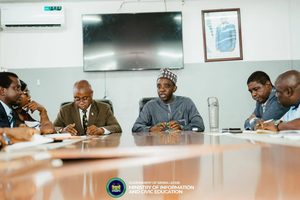
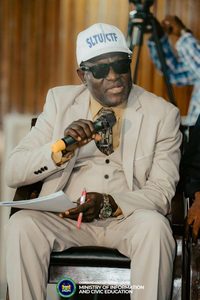
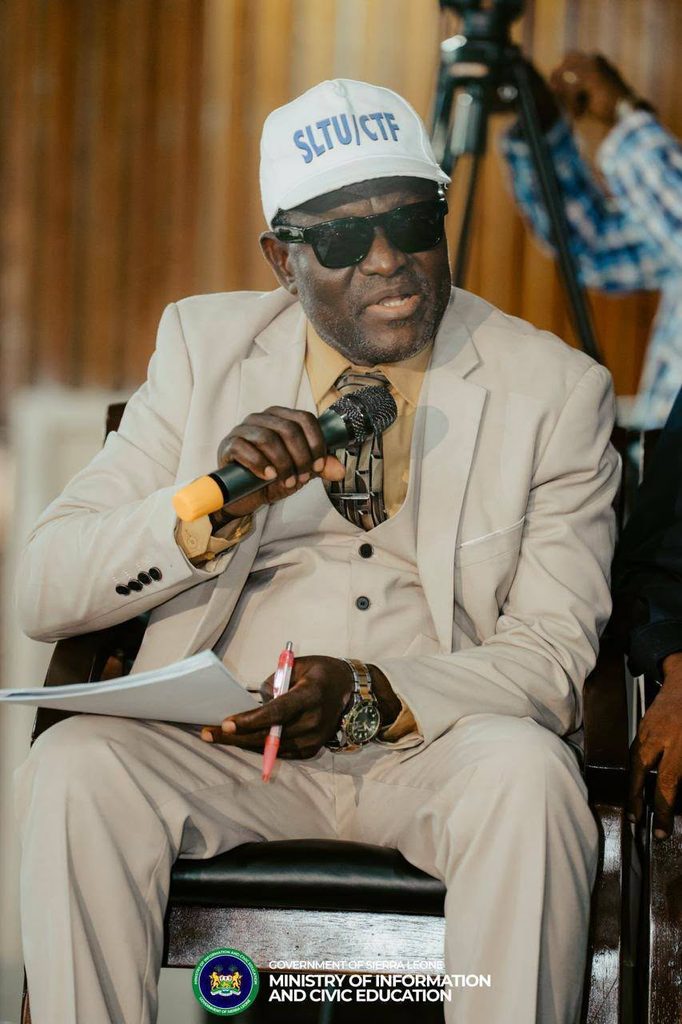
Speaking at a special edition of the Civic Town Hall, hosted by the Minister of Information and Civic Education, Hon. Chernor Bah, on the theme “How Do We Address the Threats to Quality Education in Sierra Leone?”, the President of the Sierra Leone Teachers Union (SLTU), Ibrahim Bankapoma Kargbo, and Chairman of the Conference of Principals of Secondary Schools, Abdul Razak, offered perspectives from within the teaching profession on why examination malpractice persists and what must be done to address it.
For both education leaders, the challenge cannot be reduced to the actions of pupils alone. They argued that the credibility of examinations and the quality of education depend heavily on the adults responsible for teaching, supervising and administering the system.
Mr. Kargbo identified five major drivers of corruption and examination malpractice: loss of integrity in society, misuse of technology, poor conditions of service for personnel handling examinations, poverty, and favouritism in employment coupled with an over-emphasis on academic certificates.
He described examination malpractice as a “major conspiracy” involving multiple actors and stressed that addressing it requires responsibility from every institution and stakeholder involved.
The SLTU President particularly highlighted teacher welfare, arguing that poor conditions of service can create vulnerabilities within a system where teachers and other personnel are entrusted with examination materials and processes.
He maintained that improving salaries and working conditions could help reduce the pressures that contribute to corruption, while making clear that he was not seeking to justify corrupt practices.
However, the discussion also underscored a fundamental tension: better conditions may support integrity, but integrity itself cannot be replaced by better pay.
A participant challenged the suggestion that poor remuneration should be closely linked to corruption, pointing to the example of parents who worked as teachers for decades despite severe economic hardship, including periods when teachers’ salaries were delayed for months.
The intervention reinforced the argument that professional ethics must remain central to the teaching profession. It suggested that individuals can face difficult circumstances without compromising their principles, making integrity an essential personal and professional responsibility.
That debate brought the discussion back to the role of school leadership.
For Mr. Razak, protecting examination integrity begins with the responsibility of principals and school administrators. He stressed that principals must ensure that examination materials are properly received, secured and handled, and must resist personal interests or external pressures that could compromise the examination process.
He recalled a time when principals carried direct responsibility for safeguarding examination materials and ensuring that every item was properly accounted for, arguing that the changing education environment makes professional discipline and accountability even more important today.
Beyond examinations, Mr. Razak called for a stronger career pathway for teachers entering school leadership. He argued that becoming a principal should not simply be a matter of appointment, but should reflect experience, professional development, competence and demonstrated leadership ability.
He advocated a structured progression in which teachers gain classroom experience before moving through positions such as senior teacher and vice principal and eventually taking on the responsibility of principal.
For him, effective school leadership requires mentorship, supervision and continuous professional training
The perspectives of the two education leaders ultimately converge on a broader point: tackling examination malpractice requires more than policing examination halls. It requires strengthening the people and institutions that make the education system work.
Teachers must be adequately supported, but they must also uphold the ethical standards expected of professionals. Principals must be empowered to lead, but they must equally be held accountable for the integrity of their schools. Pupils must be prepared for examinations, while parents, government and communities must contribute to an environment that values genuine learning over shortcuts.
The Civic Town Hall therefore presented examination malpractice not simply as a problem of cheating, but as a system-wide test of professional ethics, leadership, accountability and social values.
For Sierra Leone to produce credible graduates and restore confidence in its education system, the message from the teaching profession is clear: better conditions, stronger leadership and effective enforcement must go hand in hand with integrity.
The responsibility, ultimately, belongs to everyone but those entrusted with teaching and leading schools remain at the heart of the solution.