By Augustine Bamie Anthony, MOICE
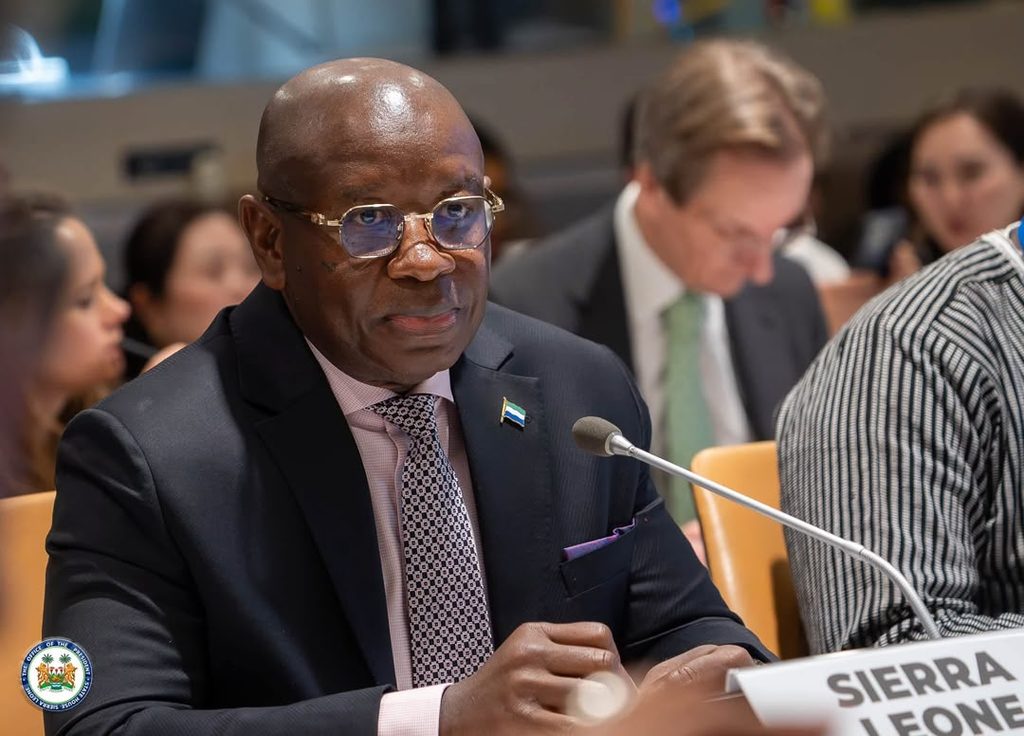
President Julius Maada Bio has reinforced Sierra Leone’s leadership in the campaign for Africa’s permanent and meaningful representation in global decision-making.
Speaking at the 81st United Nations General Assembly, President Bio said the legitimacy and effectiveness of the Security Council were weakened by the continued absence of Africa from its permanent membership.
“The Security Council still reflects the world of 1945,” President Bio said, arguing that Africa could no longer be excluded from the highest level of international peace and security decision-making.
Africa is home to more than 1.6 billion people and continues to experience the consequences of decisions taken by institutions in which it remains underrepresented. President Bio stressed that no durable global solution on peace, climate change, food security, energy or technology could be achieved without African leadership.
Under President Bio’s stewardship, Sierra Leone has emerged as a respected champion of Africa’s Common Position on Security Council reform. As coordinator of the African Union Committee of Ten, Sierra Leone continues to advance Africa’s demand for no fewer than two permanent seats with all the rights and privileges of permanent membership, including the veto if it is retained, and five non-permanent seats.
President Bio expressed concern that years of intergovernmental negotiations had not yet produced meaningful reform. He called for Member States to develop a consolidated model before the conclusion of the current session, in keeping with commitments made under the Pact for the Future.
He also highlighted Sierra Leone’s contribution during its 2024–2025 tenure on the Security Council. During that period, the country acted as a voice of reason and a bridge across political divisions.
Sierra Leone convened the Council’s first high-level debate on redressing historical injustice against Africa, placed conflict-related food insecurity at the centre of the Council’s agenda, and co-drafted, with Guyana, Resolution 2807 on Youth, Peace and Security.
The resolution, adopted unanimously, strengthened the role of young people in conflict prevention and peacebuilding.
For President Bio, representation is not merely a matter of occupying seats. It must change decisions, improve lives and ensure that institutions reflect the realities of the people they serve.
He therefore linked Security Council reform to the need for greater fairness in international financial institutions. Developing countries, he said, require stronger representation, fairer voting power, increased capital, affordable finance, concessional resources and fairer debt treatment.
President Bio’s address confirmed Sierra Leone’s determination to use its diplomatic influence in service of Africa’s dignity, voice and development.