By Hon. Chernor Bah
Minister of Information and Civic Education
The Spanish-born American philosopher George Santayana once warned that “those who cannot remember the past are condemned to repeat it.” For Sierra Leone, more than two decades after the end of our civil war, President Julius Maada Bio has given that warning practical meaning by finally and formally deciding that we must remember.
By instituting National Remembrance Day, our country has taken a bold and necessary step: not only to recall what happened, but to confront it honestly, mourn it collectively, and learn from it deliberately.
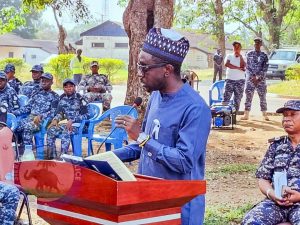
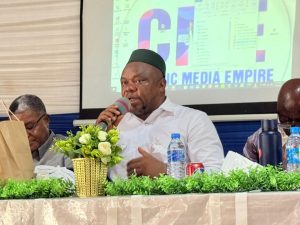
Throughout the past week, from Bum in Bonthe District to Bomaru in Kailahun, communities gathered in solemn reflection. Paramount chiefs, civil society leaders, government officials, faith leaders, survivors, and ordinary citizens stood side by side to honour the men, women, and children whose lives were cut short by a brutal conflict. White ribbons were worn. Prayers were offered. Tears were shed. Memories long buried were brought gently into the open.
President Bio’s decision to formally recognise National Remembrance Day is more than symbolic. It is an act of national courage. It affirms a simple but profound truth: a nation cannot heal through silence, and remembrance is not the reopening of wounds, but the beginning of their proper closure.
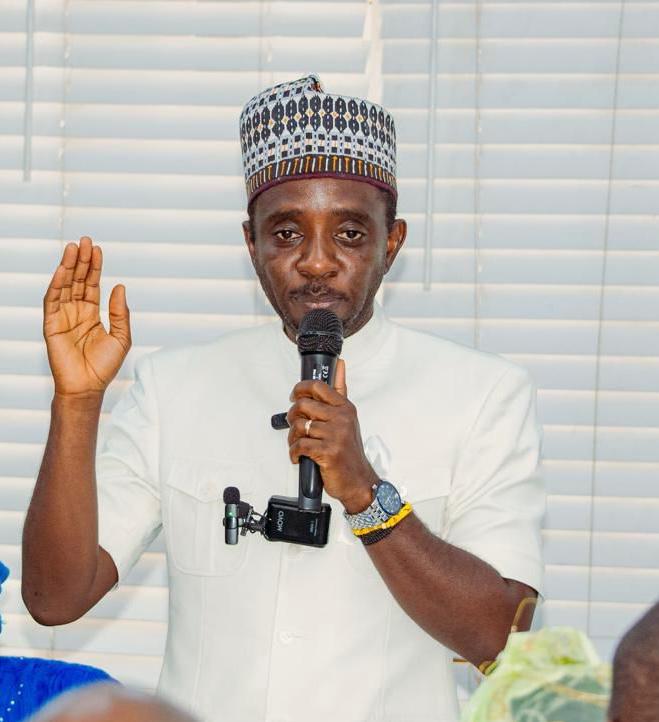
At the wreath-laying ceremony with war wounded and amputees, I said: “This day is about acknowledging our pain, honouring our fallen, and committing ourselves—collectively and consciously—to ensuring that the horrors of the past are never repeated.”
For many Sierra Leoneans, this was the first time their grief felt publicly recognised.
Nowhere was this more evident than in Kailahun, where 57-year-old Aminata Yongai, who lost several relatives during the war, spoke with quiet strength.
“More than twenty years after the war, I have finally found some closure,” she said. “I know I will never see them again, but I feel closer to them now. I feel like I can finally move on.”
Her words remind us that remembrance is not about dwelling in sorrow. It is about restoring dignity to loss and humanity to memory.
Remembering Journalists Who Died for Truth
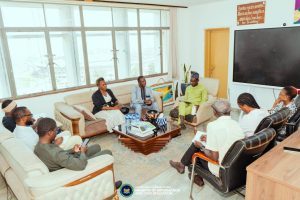
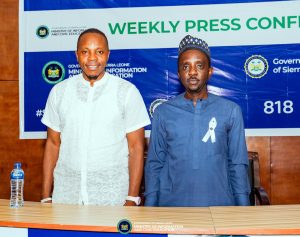
As part of the national observance, the Ministry of Information and Civic Education partnered with the Sierra Leone Association of Journalists to host a special programme to honour journalists who lost their lives reporting on the war—men and women whose only weapon was truth, and whose commitment to public information often placed them directly in harm’s way.
Among those remembered was Paul Mansaray, former Editor of Standard Times, who fled rebel attacks in Freetown and sought refuge in Kissy, only to be found and killed alongside his wife and two children inside a church—a tragedy that captures the indiscriminate cruelty of that period.
We also honoured Eddie Smith, Northern Regional Correspondent for SLBS, and Emmanuel Kabbia of New Citizen, both killed in an ambush on the Makeni–Kono highway while on official duty.
The nation remembered Dominic Kabba Kargbo, a freelance journalist murdered shortly after his now-famous BBC interview, and Sao Man Conteh of Awoko newspaper, who died during the May 8 protest at Foday Sankoh’s residence in Freetown.
Yet remembrance was not limited to those who perished.
We also recognised journalists who survived extraordinary danger: Kelvin Lewis, who embedded with military forces to report from the frontlines; Umaru Fofanah, who was beaten, shot, and left for dead while verifying information; and Julius Spencer and Hannah Fullah, whose steady voices provided credible information to millions during the darkest days of our history.
As one veteran journalist observed during the programme, “Journalism during the war was not just a profession—it was an act of bravery and national service. These sacrifices are not lost on us.”
Remembrance as a Moral Responsibility
National Remembrance Day is not an endpoint. It is a beginning.
It marks the start of long-overdue closure for countless families. It is also a reminder of unfinished responsibilities—especially toward war wounded and amputees, whose bodies still bear permanent testimony to humanity at its worst. Their presence among us is not merely symbolic; it is a moral call to action. As a government, we will act.
President Bio’s commitment is clear: remembrance must translate into care, justice, and dignity.
At its core, this national observance forces us to confront difficult but necessary questions. What kind of country do we want to be? What lessons have we truly learned? And how do we ensure that future generations inherit peace, not pain?
The answer lies not only in policy, but in memory.
By choosing to remember, Sierra Leone chooses humanity over amnesia, unity over denial, and hope over despair. By saying “never again,” we are not simply recalling history—we are making a promise.
And that promise must endure.