Civic Day Series Bo District
Tuesday, 14th October 2025
Key Highlights
By: Zacharia Jalloh, Ministry of Information and Civic Education

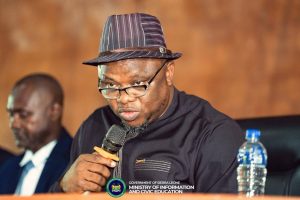
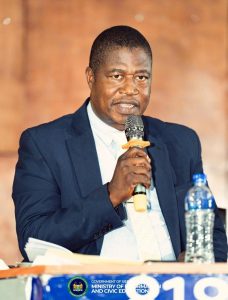
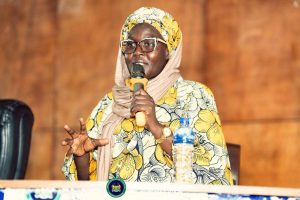
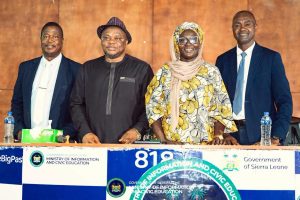
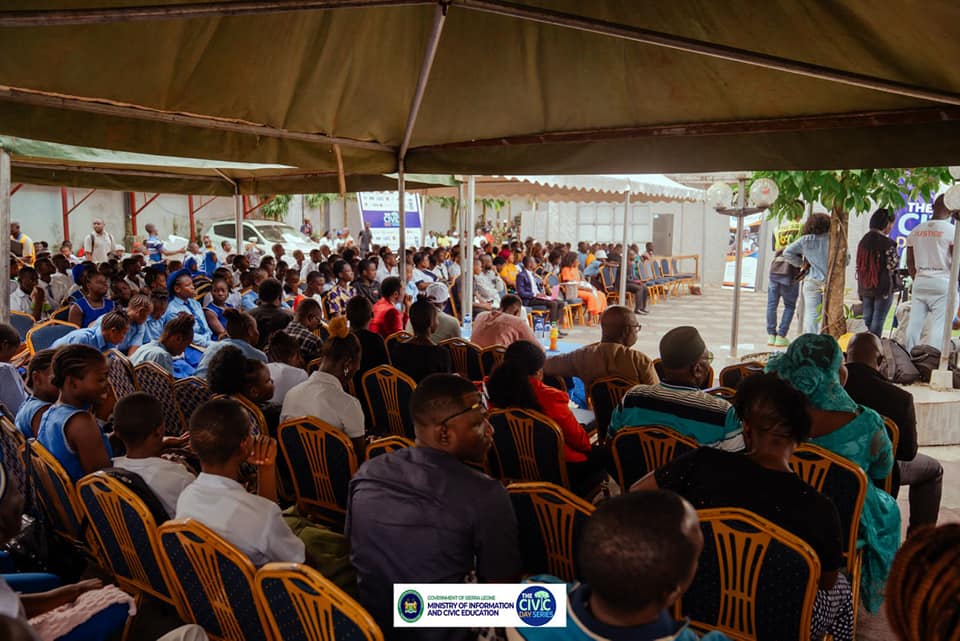
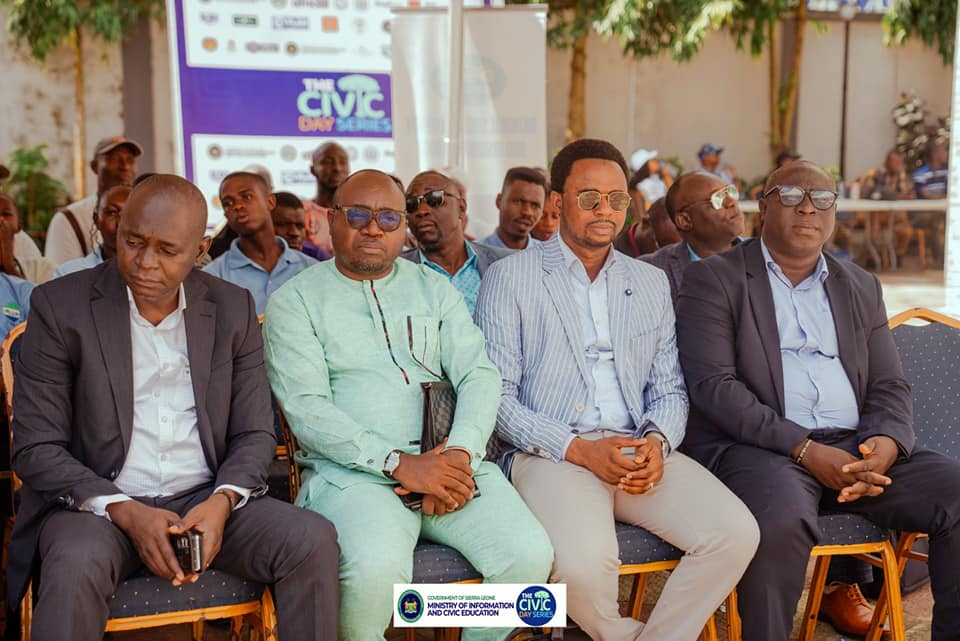
The Ministry of Information and Civic Education continued its Civic Day Series in Bo District on Tuesday, 14th October 2025. The event brought together government officials, local authorities, and citizens to strengthen dialogue, promote accountability, and bridge the gap between government and the people. Key discussions focused on youth empowerment, women’s advancement, education, social protection, and national development priorities. The following are the key highlights:
 A Warm Welcome to Bo District
The Resident Minister of the Southern Region, Ing. John Abu, welcomed the Ministry of Information and Civic Education to Bo District. He praised Minister Chernor Bah for bringing the Civic Day Series to the South, describing it as an innovative initiative that brings governance closer to the people. Ing. Abu encouraged participants to share the knowledge gained with others and commended the Ministry for using Krio a language understood by all, to engage citizens effectively.
Empowering Youths Through Skills and Scholarships
The Minister of Youth Affairs, Ibrahim Sannoh, announced the completion of Sierra Leone’s first-ever Status of Youth Report, which was presented to President Julius Maada Bio. The report identifies key gaps in youth development and provides a roadmap for government intervention. Minister Sannoh revealed that the Ministry will soon roll out 1,500 scholarships for commercial motorbike riders (“Okada riders”) in six districts to train them in middle-level technical skills such as masonry, plumbing, carpentry, and air-conditioning maintenance. He further disclosed that 500 scholarships will be awarded to the best-performing students in this year’s WASSCE for international university studies.
Advancing Women’s and Children’s Rights
The Deputy Minister of Gender and Children’s Affairs, Hindowa Buakai Bindi, highlighted President Bio’s remarkable record in promoting women’s empowerment. He cited key achievements such as the enactment of the Gender Equality and Women’s Empowerment (GEWE) Act, the approval of a new Gender Policy, the establishment of gender desks in all MDAs, and the appointment of the country’s first female army commander. Deputy Minister Bindi also emphasized the passage of the Child Rights Act 2024 and the Alternative Care Policy, which replaces orphanages with temporary care centers designed to reintegrate children into their communities within six months.
Sports as a Tool for Employment and Development
The Director of Sports, Aroun Korgi, emphasized that the sports sector has created more jobs for young people than any other government department. He noted the expansion of sports participation and the rehabilitation of stadiums across the country, underscoring the government’s commitment to using sports as a vehicle for empowerment and national unity.
Strengthening Democracy and Legal Reforms
The Solicitor General, Robert Kowa Esq., announced that President Julius Maada Bio has officially signed the Child Rights Act 2024 into law. He further explained the benefits of the Proportional Representation (PR) System, which has increased women’s representation in parliament by 30%. He noted that PR is rooted in the 1991 Constitution and helps to reduce political violence, promote unity, and ensure fair representation. He encouraged political actors to educate citizens about the system’s long-term benefits.
Women’s Forum Commends the GEWE Act
Evelyne Konya Turay, Coordinator for the Women’s Forum–South, thanked President Bio for enacting the GEWE Act, describing it as a landmark step toward gender equality. She expressed optimism about women’s growing leadership role, declaring that Sierra Leone is ready for a woman president.
Strengthening Technical and Vocational Education
The Minister of Technical and Higher Education, Dr. Haja Ramatulai Wurie, emphasized the importance of Technical and Vocational Education and Training (TVET) in building a skilled workforce. She highlighted a partnership with UNDP that trained 100 young people in Heating, Ventilation, and Air Conditioning (HVAC) and building construction. The Ministry has since developed a national plumbing curriculum and is harmonizing the National Qualifications Framework to allow TVET graduates to advance up to PhD level. Minister Wurie stressed the need to change public perceptions of TVET as a “second-class” career path.
Expanding Access to Education Through Student Loans
The Chief Executive Officer of the Student Loan Scheme, Paul Joseph Amara, informed participants about the government’s initiative to provide affordable loans to students pursuing higher education. He noted that the pilot phase supported 700 postgraduate students—including 34 PhD and 666 master’s candidates and that plans are underway to expand coverage to undergraduate and TVET students.
Social Protection and Pension Reforms
The Director of Communications at NASSIT, Mohamed Bangalie, briefed participants on the Trust’s operations, noting that 32,059 pensioners are paid monthly, with the highest earning NLe161,000. He praised President Bio for raising the minimum pension from NLe25 to NLe250. Mr. Bangalie announced plans to digitize customer access by 2025 and revealed that NASSIT will soon launch the Sierra Leone Informal Sector Scheme, allowing traders, bike riders, and others in the informal economy to access pensions and loans. He also disclosed approval to invest in 8,000 student hostels across six campuses nationwide.
Advancing Data and Statistical Systems
The Director of Census at Statistics Sierra Leone, Mr. Abdulai Brima, announced the deployment of over 1,000 field staff for the national cartographic process. He also revealed plans to conduct a Pilot Census in December 2025 to test methodologies, tools, and systems ahead of the 2026 National Census.