By; Amara Alpha, Outreach Officer of the Strategic Communication Unit- MoICE
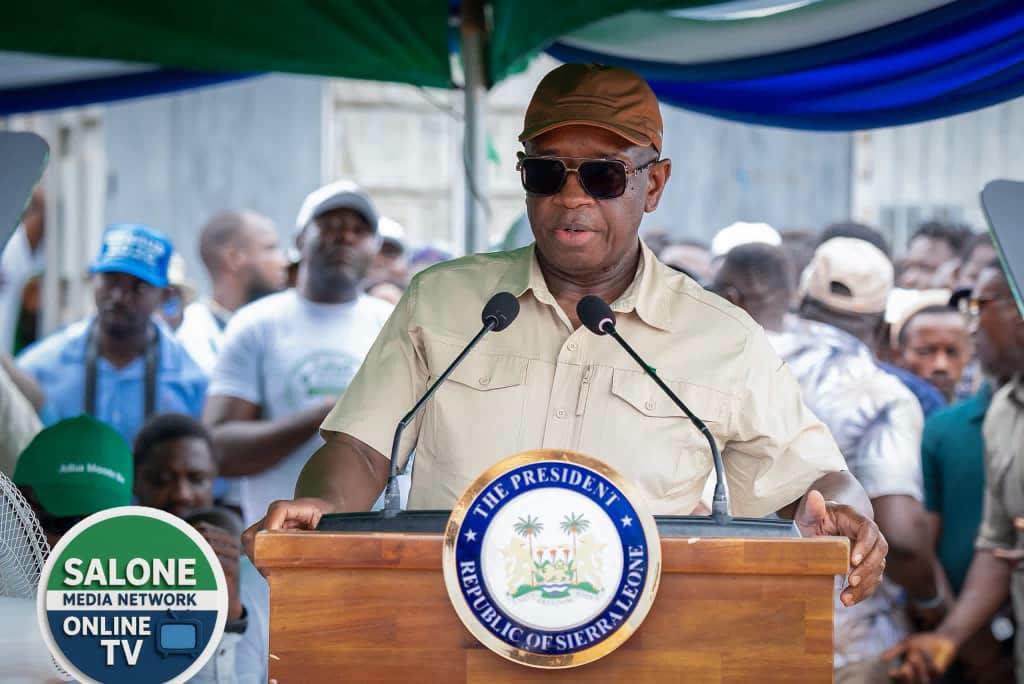
Manowa Town, Peje Bongre Chiefdom, Kailahun District, 20 June 2026 – President Dr. Julius Maada Bio has commissioned the historic Manowa Bridge across the Moa River, describing the project as a transformative investment that will end decades of isolation for communities in Kailahun District and strengthen economic opportunities across Sierra Leone’s Eastern Region.
Speaking at the commissioning ceremony, which was attended by government ministers, Members of Parliament, traditional leaders, development partners, and local residents, President Bio said the bridge represents a significant milestone in his Government’s commitment to infrastructure development, connectivity, and inclusive national growth.
For generations, the journey between these communities was measured not by distance but by whether the ferry was operating, whether the rains had arrived, and whether crossing the river was possible at all. Today, that reality changes, the President said.
He noted that since Sierra Leone’s independence in 1961, communities along the Moa River, including Manowa, Pendembu, and surrounding Chiefdoms, had relied on a manual ferry crossing that was often disrupted by weather conditions and operational challenges.
Today, we commission a modern, all-weather bridge that replaces uncertainty with reliability, isolation with connection, and delay with opportunity. This bridge is a declaration that no Sierra Leonean should be disadvantaged because of where they live, he stated.
President Bio explained that the bridge forms part of the Government’s deliberate strategy to replace unreliable ferry crossings with permanent infrastructure capable of supporting economic activity and improving the quality of life of citizens. The project was implemented under the Smallholder Commercialisation and Agribusiness Development Project (SCADeP) with support from the World Bank.
The President disclosed that in 2020, the Government secured a US$30 million World Bank grant to replace several ferry crossings nationwide with modern bridges. He noted that four bridges have so far been completed, including those at Manowa, Mattru-Senehun, Gendema, and Tomparie.
These projects form part of a national programme to connect communities, unlock economic potential, strengthen resilience, and ensure that development reaches every corner of Sierra Leone, he said.
President Bio highlighted the economic significance of the bridge, noting that the 183-metre-long, two-lane structure will directly benefit more than 160,000 people by improving access to markets, schools, healthcare facilities, and investment opportunities. He encouraged farmers to take advantage of the improved transportation network to increase agricultural production and expand trade.
Kailahun is one of Sierra Leone’s most fertile agricultural districts. There was a time when reaching this district required days of difficult travel. Today, we are changing that reality. Farmers can now move their produce more efficiently and access larger markets, he said.
The President also called on local communities to take ownership of the bridge and protect the infrastructure for future generations. He expressed appreciation to the World Bank and other development partners for their continued support, while commending the people of Manowa and surrounding communities for their cooperation throughout the construction process.
In his welcome address, Paramount Chief Henry Taka Hukpon Baio of Peje Bongre Chiefdom praised President Bio’s development agenda and described the bridge as a transformative project that would positively impact generations to come.
He thanked the Government, development partners, contractors, and local communities for their collective efforts and appealed for the construction of roads linking surrounding communities to the bridge.
Minister of the East and SLPP Chairman for Kailahun District, Hon. Gbessay J.J. Ngobeh, commended President Bio’s leadership and described the bridge as a major achievement in the Government’s efforts to improve connectivity and accelerate development in the Eastern Region. He assured residents that ongoing road projects in the district would further complement the benefits of the bridge.
Minister of Agriculture and Food Security, Dr. Henry Musa Kpaka, emphasized the critical role of infrastructure in transforming agriculture and stimulating economic growth. He said improved connectivity would enable farmers to transport larger volumes of produce, including cocoa and other cash crops, more efficiently and at lower costs.
This bridge is not only about transportation; it is about improving livelihoods, increasing farmer incomes, reducing post-harvest losses, and strengthening Sierra Leone’s agricultural value chains, he said.
Dr. Kpaka also acknowledged the contributions of the World Bank, technical teams, project managers, and local stakeholders whose efforts contributed to the successful completion of the project.
World Bank Country Manager, Mr. Abdu Muwonge, described the commissioning of the bridge as a historic milestone in Sierra Leone’s development journey. He noted that the project would significantly enhance trade, agricultural productivity, and regional integration.
This is not just infrastructure; it is about connecting people, markets, and opportunities. The bridge will help unlock the economic potential of this region and improve the lives of thousands of people, he said.
Mr. Muwonge reaffirmed the World Bank’s commitment to supporting Sierra Leone’s development priorities and encouraged stakeholders to ensure proper maintenance and oversight of public infrastructure projects.
The ceremony concluded with the official ribbon-cutting and inspection of the newly commissioned Manowa Bridge, symbolizing a new era of connectivity, opportunity, and economic growth for Kailahun District and Sierra Leone as a whole