By: Salamatu Conteh
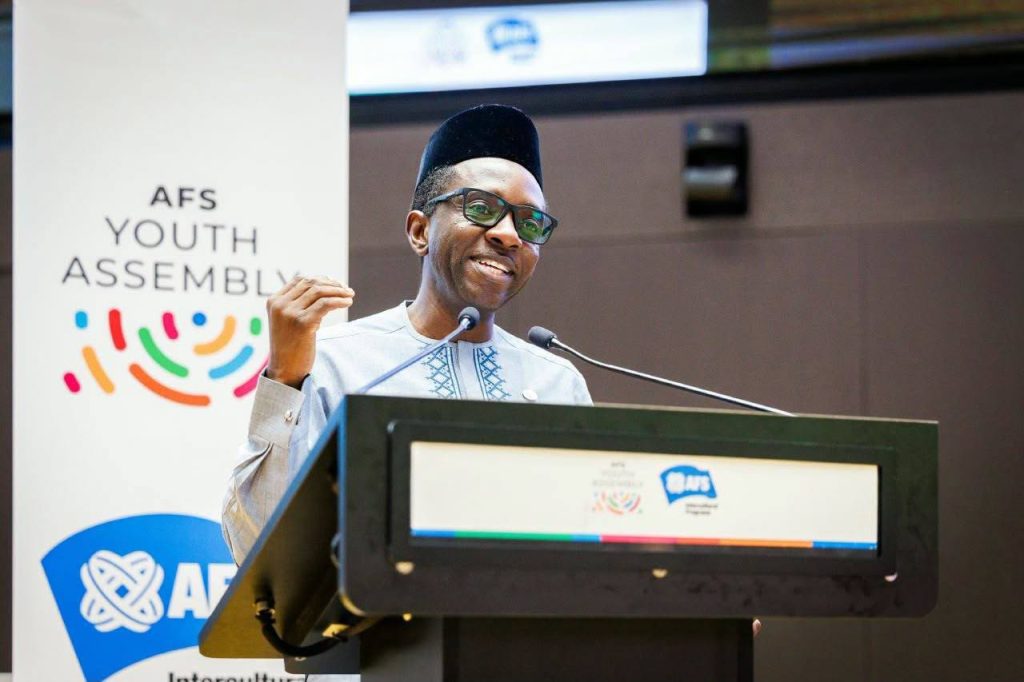
Geneva, Switzerland – Minister of Information and Civic Education, Chernor Bah, has challenged young people to turn their outrage over injustice into action, leadership and institution-building, urging them to move beyond criticism and become active participants in shaping the decisions that affect their lives.
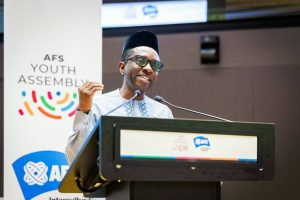
Minister Bah delivered the message during two engagements at the AFS Youth Assembly in Geneva: an opening plenary address under the theme “Rise. Reimagine. Rebuild: A World for All,” and a fireside conversation on civic education, youth leadership and political participation.
Drawing on his journey from a 15-year-old activist in Sierra Leone to serving in government, Bah reflected on the role outrage has played in shaping his activism and public service.
“I am an activist, a noise maker, somebody who refuses to settle when things are not right,” he said.
But he stressed that activism cannot end with identifying what is wrong.
“My activism is not just about bringing things down; it is about bringing things up.”
Bah recalled helping to establish Sierra Leone’s Children’s Forum Network at the age of 15, creating a platform for children to participate in national conversations, including the country’s peace process and Truth and Reconciliation Commission.
“I was only 15, but I had the audacity to ask my country to do better,” he said.
He also reflected on the global response to the shooting of Malala Yousafzai for advocating girls’ education, and his own decision to leave his job during Sierra Leone’s Ebola outbreak to support the national response. His work during the Ebola crisis, particularly with women and girls, later contributed to the establishment of Purposeful, a movement-building hub supporting girls and feminist organizing.
For Bah, these experiences demonstrate that outrage can be a powerful starting point for change, but cannot be the end.
“Outrage is powerful—but outrage alone is not enough.”
He challenged young leaders to find their outrage, harness it, organize with others and build—moving from identifying injustice to understanding the systems behind it and creating better alternatives.
“Change is not a solo performance,” he said, encouraging young people to build alliances, listen to those most affected and share power.
During the fireside conversation hosted by Wantoe T. Wantoe, Executive Director of African Policy and AFS Intercultural Programs, Bah extended that challenge to politics and public service.
Reflecting on his own transition from activism into government, he said young people who want to change society should not abandon the spaces where important decisions are made.
“Politics is too important to be left with politicians alone.”
Bah said that after years of challenging decision-makers from outside, he came to believe that activists must also be prepared to enter the room and help shape the decisions themselves.
“When young people get involved, they shift the conversation. It changes the landscape. It changes rooms,” he said.
He pointed to Sierra Leone, where President Julius Maada Bio has appointed several young people to senior government positions, including 10 ministers below the age of 40, as an example of how youth participation can bring new perspectives into government.
Bah also drew lessons from his current role as Minister of Information and Civic Education, particularly the challenge of misinformation and the need to make government communication more accessible.
He explained that increasing the use of Krio, communicating proactively and providing timely factual information have helped government reach citizens directly and strengthen access to credible information. Rather than focusing only on those spreading misinformation, he said institutions must understand why citizens turn to alternative sources and communicate in languages and formats people understand and trust.
Bah also cautioned young activists who eventually enter positions of leadership not to lose touch with the people and causes that brought them there.
“When you enter positions of leadership—as many of you will—do not become so comfortable in the room that you forget those still outside it. Keep a seat open. Keep listening.”
Across both engagements, Bah’s message was clear: young people should challenge systems that fail them, but they must also be willing to organize, lead and build better ones.
“Most times, you cannot do it alone,” he said. “Find your clique, someone who is outraged like you, and rise, reimagine and rebuild.”
He concluded with a call to the young leaders gathered in Geneva:
“Rise above the limits imposed on you. Reimagine systems that exclude people. Rebuild institutions, communities and relationships so that they work for everyone.”