By: Kadiatu Bash Kamara
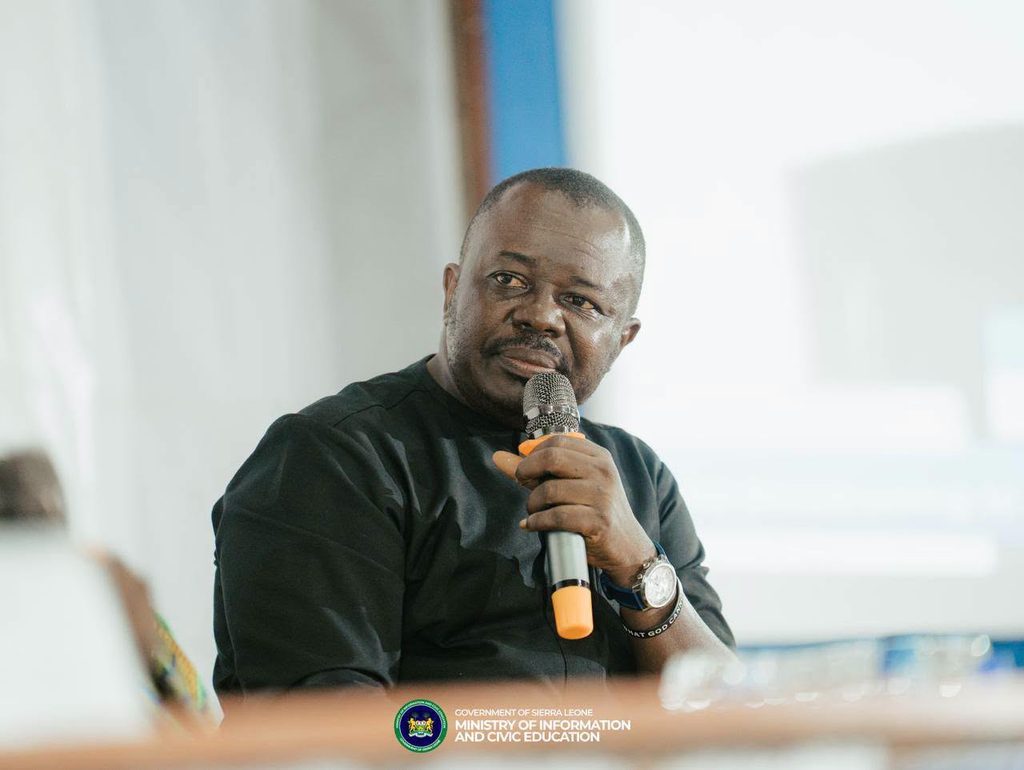
The Director of the Decentralization Secretariat Alex Bhonapha, has highlighted the importance of sustainable funding, local revenue generation and partnerships in strengthening local governance in Sierra Leone. He made these remarks during the Weekly Press Briefing hosted by Mohamed Jaward Nyallay, Strategic Communications Adviser, at the Miatta Civic Centre on Tuesday, 13 October 2026. The briefing focused on the rationale, benefits and opportunities associated with redistricting and the establishment of new localities, particularly in relation to improving administrative efficiency and bringing development closer to communities.
Speaking on the financial requirements of local governance, the Director explained that local councils need reliable sources of revenue to carry out their responsibilities and support development initiatives within their respective jurisdictions. He highlighted the importance of enabling councils to generate revenue internally, including through property rates, licences and other locally administered revenue streams. According to him, strengthening these sources of income can help councils finance essential activities and respond more effectively to the needs of their communities.
Bhonapha further explained that internally generated revenue is only one component of the funding required to sustain local government operations. He noted that government grants and support from development partners also play important roles in financing local development programmes. Combining these sources of funding can help local councils meet their administrative obligations, implement development projects and improve the delivery of services to residents.
The Director also underscored the contribution of international development partners to decentralisation and local development. He referred to support from institutions such as the European Union, which has contributed to development initiatives involving local councils. Such partnerships, he explained, can provide additional resources and technical assistance to complement government efforts and strengthen the capacity of local authorities to implement projects that respond to community priorities.
He emphasised that the availability of funding must be accompanied by effective planning, proper coordination and responsible management of resources. As local administrative structures expand, councils need to be adequately prepared to manage their responsibilities and ensure that resources are directed towards identified development priorities. This includes strengthening institutional capacity, improving financial management and ensuring that local authorities have the necessary personnel and systems to function efficiently.
Bhonapha also highlighted the importance of preparing administrative centres and strengthening the operational readiness of local councils. He explained that establishing new localities requires more than defining geographical boundaries, as the process must also consider the practical arrangements needed for effective administration. These include identifying suitable administrative centres, preparing the necessary facilities and ensuring that appropriate systems are in place to support local government operations.
The Director further stressed the need for capacity-building and institutional preparation to ensure that decentralisation delivers meaningful benefits to communities. Training personnel, identifying development needs and improving administrative procedures are essential steps towards enabling local councils to perform their functions effectively. He noted that coordination between the Ministry of Local Government and Community Affairs, the Decentralization Secretariat and other relevant institutions is important in supporting these preparations and ensuring that local governance structures are equipped to meet their responsibilities.
In conclusion, Bhonapha reaffirmed the importance of sustainable financing, effective partnerships and institutional readiness in strengthening decentralisation across Sierra Leone. He explained that internally generated revenue, government grants and support from international development partners can collectively contribute to the effective functioning of local councils. As discussions on redistricting and the establishment of new localities continue, adequate preparation, sound financial management and investment in administrative capacity will remain important considerations in improving local governance and promoting development at the community level.