By Augustine Bamie Anthony, Strategic Communications, Media Monitoring Adviser, MOICE
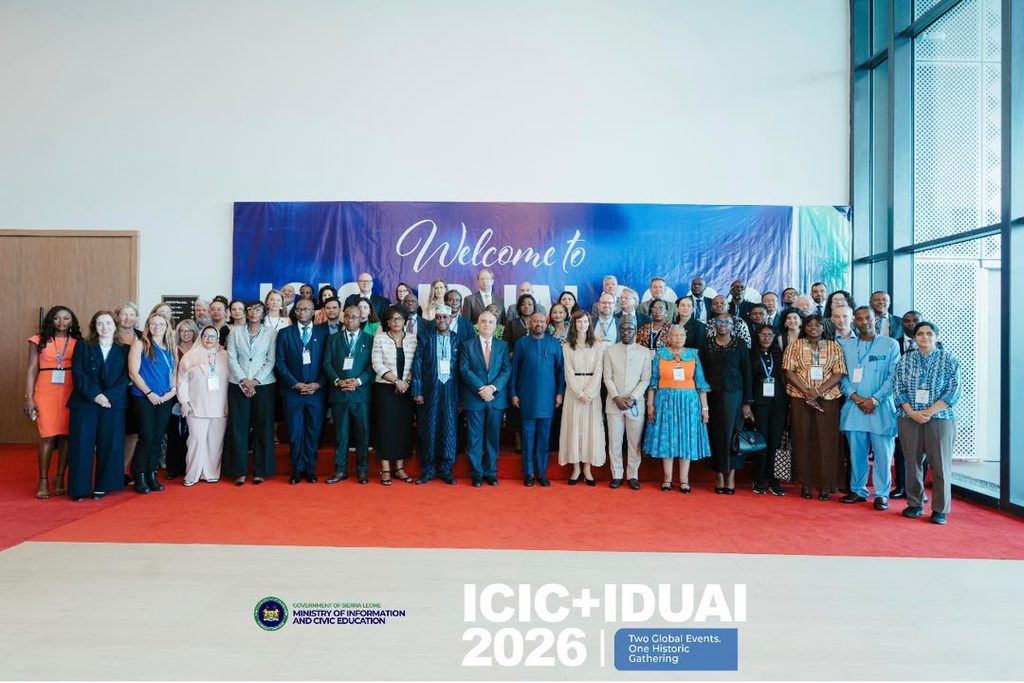
Sierra Leone’s national brand, “Where Freedom Lives,” is being given renewed international meaning as the country hosts the International Conference of Information Commissioners and International Day for Universal Access to Information 2026 at the Julius Maada Bio (JMB) International Conference Center in Lungi.
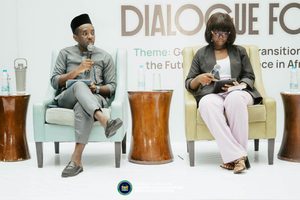
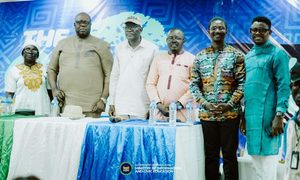
The conference has attracted information leaders, government representatives, UNESCO officials, journalists, activists, civil society actors and delegates from 41 countries. It provides a platform for Sierra Leone to demonstrate how freedom, access to information and accountable governance are shaping the country’s democratic development.
The phrase “Where Freedom Lives” is not merely a national slogan. It speaks to Sierra Leone’s history and to the collective aspirations of its people.
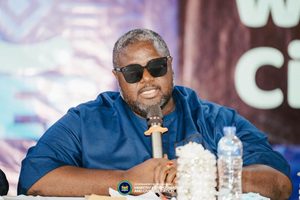
Welcoming the international participants, Minister of Information and Civic Education, Chernor Bah, said freedom has been central to Sierra Leone’s identity for generations.
Minister Chernor Bah recalled that Freetown was founded by formerly enslaved people who arrived on Sierra Leone’s coast in search of a free life. Their story remains embedded in the city’s name and in the symbolism of the Cotton Tree, which represents hope, liberty and the determination to begin again.
Minister Chernor Bah also highlighted the resilience of Sierra Leoneans in defending democracy during difficult moments in the country’s past. In 1996, citizens exercised their democratic right to vote despite the dangers of war. When military rule disrupted constitutional governance in 1997, citizens—including teachers and public servants—resisted efforts to make unconstitutional rule appear normal.
This tradition of courage, participation and resistance to oppression, Minister Chernor Bah said, continues to shape modern Sierra Leone.
Under the leadership of President Dr Julius Maada Bio, the country has taken concrete steps to widen democratic space. The repeal of criminal libel laws has been one of the most significant reforms for journalists, media institutions and public communication.
The repeal removed a colonial-era law that had constrained press freedom and created a more enabling environment for citizens and journalists to question, criticise and hold public institutions accountable.
Minister Chernor Bah said President Bio deserves commendation for this far-reaching reform, which has strengthened the legal space for public-interest journalism and affirmed the role of the media as an essential pillar of democratic accountability.
President Bio’s reform agenda has also included the abolition of the death penalty, restoration of pregnant girls’ right to attend school and reforms designed to increase women’s participation in government and the workplace.
Together, these reforms demonstrate that freedom must include the right to speak, the right to learn, the right to participate, the right to live with dignity and the right to access information.
The hosting of ICIC–IDUAI 2026 reinforces this national commitment. Minister Chernor Bah said the conference provides Sierra Leone with an important opportunity to engage information leaders from around the world on the vital relationship between information and democracy.
The right to access information is central to the idea of freedom. Citizens cannot participate effectively in public life if they do not know how decisions are made, how resources are allocated or how public institutions are performing. Journalists cannot fully serve the public interest if they are unable to access records and verify official claims.
Minister Chernor Bah noted that the Right to Access to Information Commission (RAIC) is a key institution in making this right real. Through its work, the Commission helps citizens request information, encourages public institutions to be more transparent and supports the wider culture of accountable governance that President Bio’s reforms seek to advance.
The conference also comes at a time when the information environment is becoming more complex. Artificial intelligence, social media, manipulated content and misinformation have created new dangers for public trust. These challenges make it even more important for government institutions to communicate clearly and for citizens to have access to credible, verifiable information.
Minister of Information and Civic Education, Chernor Bah, has called on delegates to work towards a Freetown Declaration that will help safeguard the public’s right to know while protecting individual rights and keeping democratic space open.
That ambition captures the full meaning of “Where Freedom Lives.” Freedom is not preserved by words alone. It is secured through laws that protect rights, institutions that deliver accountability, journalists who serve the public interest and citizens who participate responsibly.
As the conference continues in Lungi, Sierra Leone is inviting the world to see a country that is proud of its history, confident in its democratic future and committed to making freedom meaningful in the lives of its people.