By Augustine Bamie Anthony, MOICE
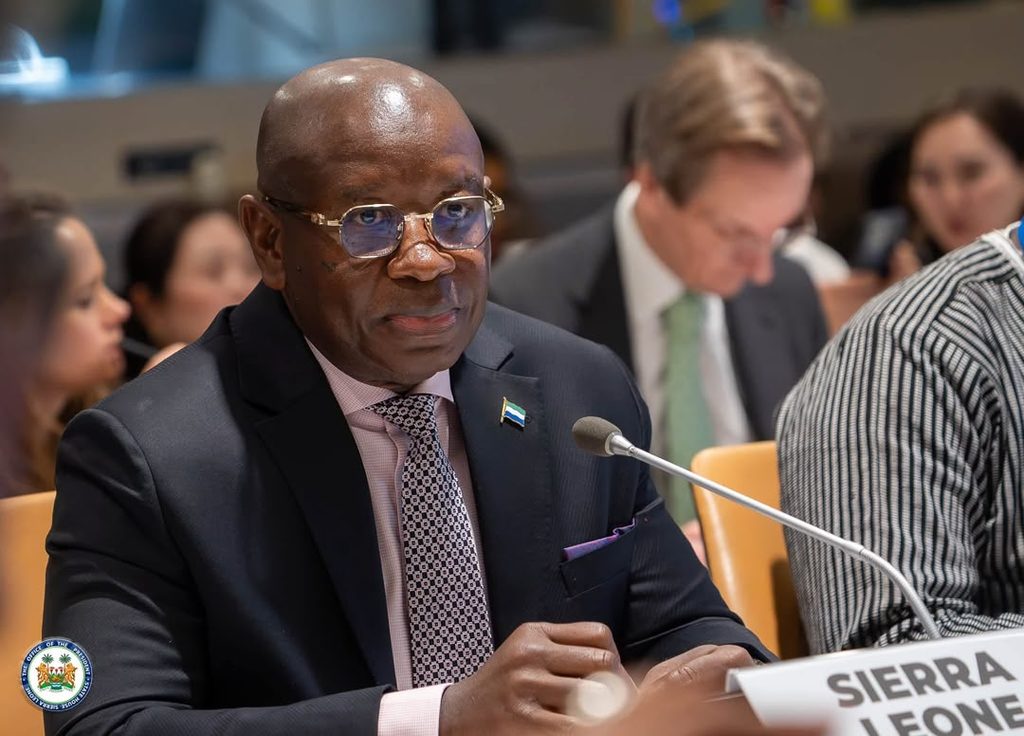
President Julius Maada Bio has told world leaders that Sierra Leone’s own journey from civil war to peace gives the country a unique and practical understanding of the value of international cooperation.
Nearly 25 years after Sierra Leone completed disarmament and formally declared its civil war over, President Bio said peace had become meaningful not only through official declarations, but through the return of families, the rebuilding of communities and the restoration of public confidence in national institutions.
The United Nations stood with Sierra Leone during disarmament, elections and the long process of peacebuilding. That experience, President Bio said, taught the country what international cooperation could achieve.
It also taught Sierra Leone that trust cannot be commanded by declaration.
Trust grows when promises are honoured, when the law protects everyone, when institutions serve their people and when citizens can see a future for themselves.
President Bio brought this experience to the 81st General Assembly at a moment when confidence in international institutions and multilateral cooperation is under severe strain.
He said Sierra Leone did not approach the United Nations merely as an observer, but as a country whose history is closely connected to the organization’s peacebuilding mission.
During Sierra Leone’s 2024–2025 tenure on the Security Council, the country acted as a bridge across divisions, convened a high-level debate on historical injustice against Africa, elevated conflict-related food insecurity and co-drafted Resolution 2807 on Youth, Peace and Security.
President Bio reaffirmed Sierra Leone’s commitment to contributing to UN peace operations, upholding international law, supporting mediation and peacebuilding, defending the rights of women and girls and serving as a bridge wherever Member States seek one.
He also pledged continued support for international justice and institutions designed to uphold the rule of law.
The President said the United Nations remained one of humanity’s boldest promises: nations may differ in size and strength, but their people do not differ in human worth.
That conviction lies at the heart of President Bio’s diplomacy.
From Sierra Leone’s peacebuilding experience to its advocacy for Africa’s representation, climate justice, youth opportunity and women’s rights, the President has positioned the country as a principled and constructive voice in global affairs.
His appeal to the world was ultimately a call for renewed confidence: confidence that cooperation can work, that international law still matters and that promises made in the halls of the United Nations can be honoured in the lives of ordinary people.