By: Zacharia Jalloh, Ministry of Information and Civic Education
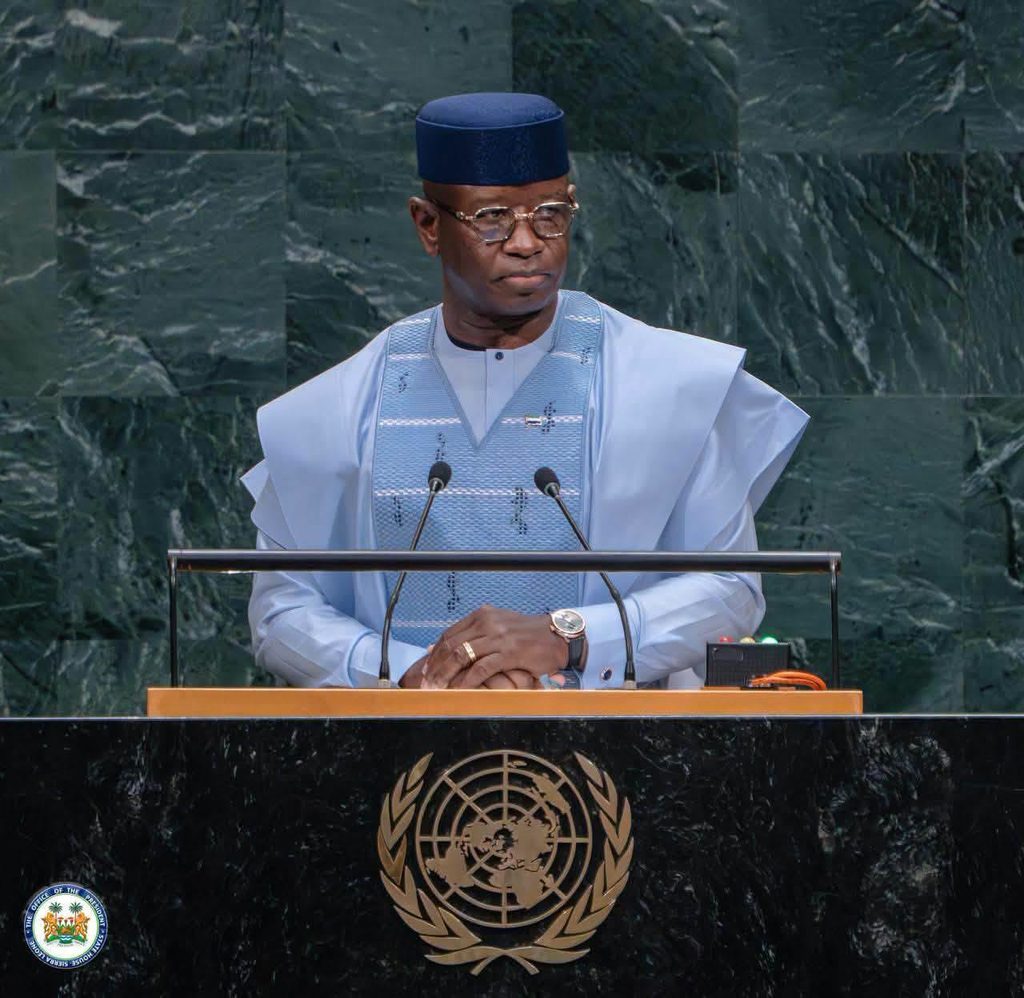
His Excellency President Dr. Julius Maada Bio has taken Sierra Leone’s advocacy for women’s empowerment and gender equality to the global stage, calling on the United Nations to entrust a woman with the organisation’s highest office for the first time in its history.
Addressing the General Debate of the 81st Session of the United Nations General Assembly in New York on the 22nd September 2026, President Dr Julius Maada Bio Bio linked Sierra Leone’s domestic efforts to advance the rights, education and protection of women and girls with the broader question of gender equality within global institutions.
Making a direct appeal for a woman to become the next UN Secretary-General, President Bio said the upcoming selection process would provide an important test of the organisation’s commitment to equality and institutional effectiveness.
“The choice of the next Secretary-General offers another test of institutional effectiveness and equality,” President Bio stated.
He pointed out that, over eight decades of the United Nations’ existence, every Secretary-General has been a man, despite the competence of women who have been put forward for the position.
“In eighty years, every Secretary-General has been a man,” he noted, adding that the women put forward for the office “have placed their competence beyond dispute.”
President Bio said the issue now was whether the international organisation would demonstrate in practice the principles of equality it promotes around the world.
“What remains is the will of this Organisation to live by the equality it asks of others and entrust a woman with its highest office,” he declared.
President Bio’s call at the UNGA builds on his Government’s emphasis on expanding opportunities for women and girls in Sierra Leone, particularly through education, legal reforms and protection from harmful practices.
Highlighting the importance of education in transforming the lives of children, President Bio said Sierra Leone’s Free Quality School Education programme is helping to widen opportunities for children irrespective of the circumstances of their birth.
“Through Free Quality School Education, we are widening the path from the circumstances of a child’s birth to the possibilities of that child’s future,” he said.
Furthermore, President Bio also pointed to Sierra Leone’s legislative action to protect girls, citing the enactment of the Prohibition of Child Marriage Act in 2024 and the country’s subsequent advocacy for the establishment of an international day dedicated to ending child, early and forced marriage which was championed by Her Excellency Dr. Fatima Maada Bio, the First Lady of the Republic of Sierra Leone.
For President Bio, the protection of girls is not only a national responsibility but part of a wider global development agenda.
“A girl in Sierra Leone is no more or less precious than a girl anywhere else,” he stated. “Protecting her childhood, education and freedom is part of what development means.”
His remarks at the UNGA placed the experiences and aspirations of Sierra Leonean girls within the wider global conversation on equality, opportunity and representation, while challenging the international community to reflect those same principles within the leadership structures of the United Nations.
The call for a woman to occupy the UN Secretary-General position also places Sierra Leone among voices advocating greater gender representation at the highest levels of international leadership.
President Bio’s message was therefore centered on a simple principle; the global institutions that call for equality must also demonstrate it through their own leadership choices.