
By: Amara Alpha, Outreach Officer, Strategic Communications Unit – MoICE
KOIDU CITY, Kono District, Tuesday 24th February 2026 — The Sierra Leone Roads Authority (SLRA) has constructed or rehabilitated a total of 442.86 kilometres of roads between 2018 and 2025, marking a significant phase in the country’s road infrastructure development.
This revelation was made by the Director General of Sierra Leone Roads Authority, Ing. Alfred J. Momodu, during a stakeholder engagement at the District Council Hall in Kono. Addressing participants, Ing. Momodu detailed the Authority’s strategic approach to national connectivity, acknowledging that while road construction remains one of the government’s most capital-intensive undertakings, careful prioritization and phased implementation have been key.
“We cannot build them all at once, so we prioritize strategically,” Ing. Momodu stated.
Road Classification and Regional Connectivity
The Director General outlined the classification of national roads – trunk, secondary, urban, and feeder roads – and clarified the SLRA’s primary focus. While feeder roads have received substantial support from development partners, the SLRA has concentrated its efforts on trunk, secondary, and urban roads. A key priority has been enhancing connectivity between districts, such as the critical route linking Kenema and Kono. The Authority has also prioritized connecting all District Headquarters towns with paved road networks.
Ing. Momodu specifically highlighted that Kono has directly benefited from these efforts through urban road improvements, which are enhancing mobility and boosting commercial activities within the district.
Bridge Construction and Project Funding
In addition to road works, the SLRA has overseen the construction of over 56 bridges during the same seven year period. This includes 18 major bridges that are critical to the integrity of the national transportation network. The Director General noted that these projects are made possible through a collaborative funding model, combining support from development partners with counterpart funding provided by the Government of Sierra Leone.
A Call for Public Recognition
Acknowledging the challenges that persist, Ing. Momodu encouraged citizens to recognize the scale of the infrastructure development currently underway. “If you compare the 7 year period with previous ones, the scale of the work done is remarkable,” he said, urging the public to remain engaged in national development initiatives. “Road infrastructure is fundamental to economic transformation,” he concluded.
Cee Bah Underscores Citizens Engagement
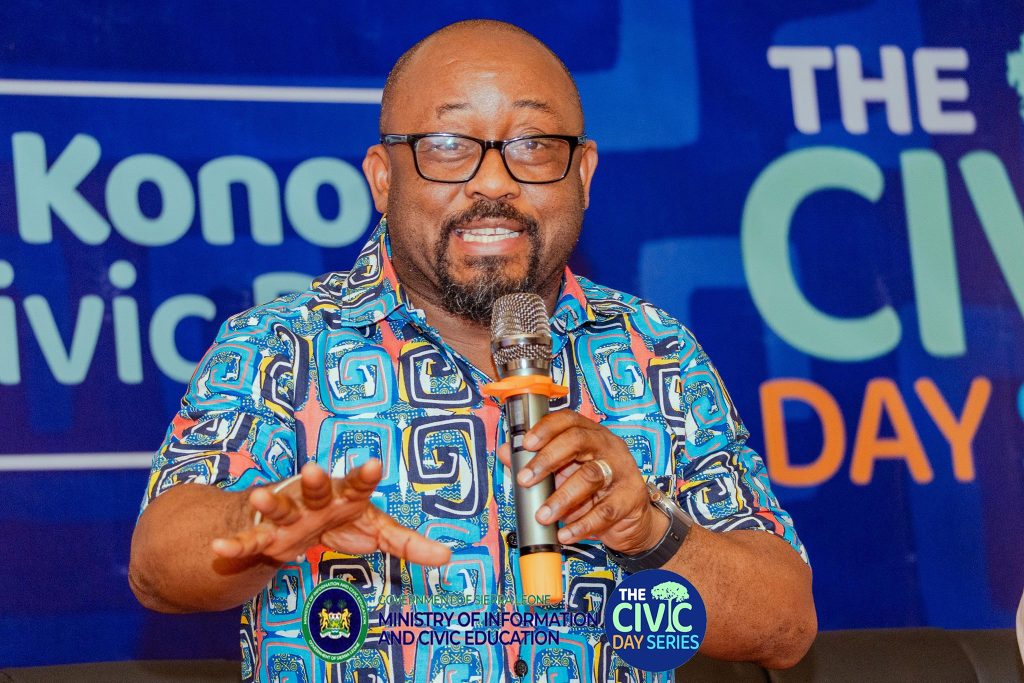
In his opening remarks, the Minister of Information and Civic Education, Hon. Chernor A. Bah, emphasized that sustained communication between the government and citizens is essential for maintaining trust. He noted that such engagements ensure development efforts effectively meet the real needs of communities. The session concluded with a question-and-answer segment between the officials and the attending residents.


