By Claudia Redwood-Sawyerr
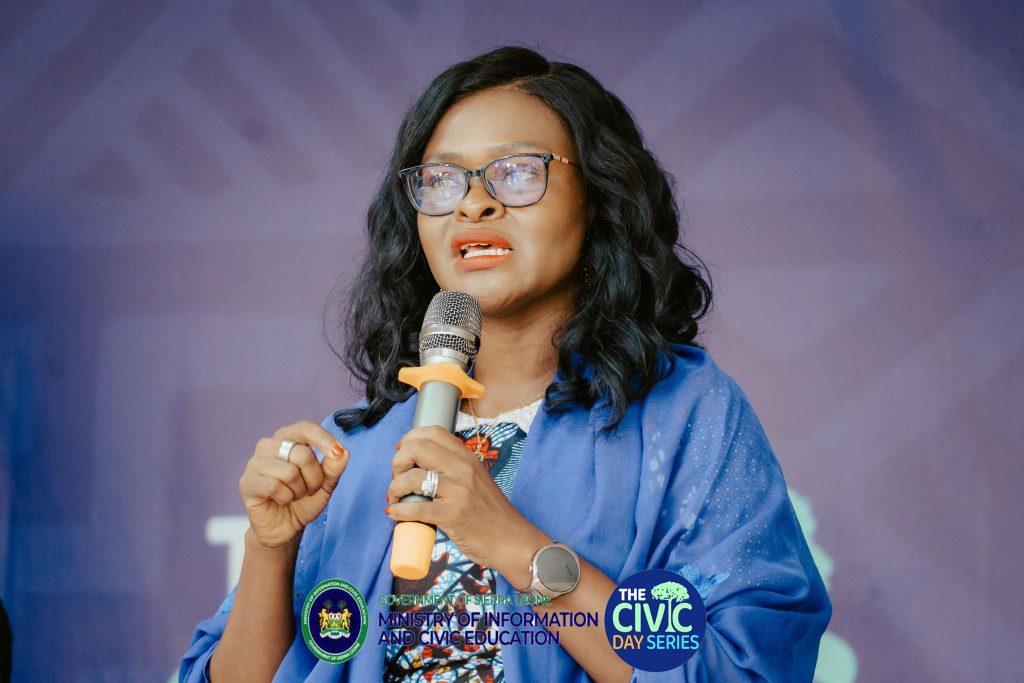
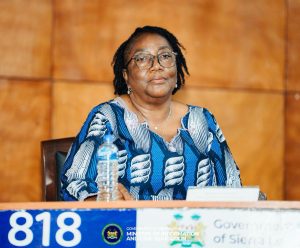
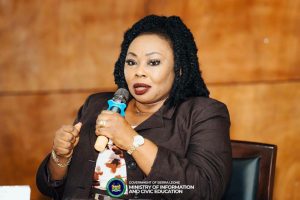
The Minister of Higher and Technical Education, Dr. Ramatulai Wurie, has reaffirmed government’s commitment to expanding access to technical and higher education across Sierra Leone, emphasizing skills development as a critical driver of national growth.
Speaking during the Karene Civic Day Series, on Tuesday 14th April 2026, Dr. Wurie highlighted the urgent need to reposition technical and vocational education as a central pillar of development, noting that the country cannot rely solely on traditional academic professions.
“While many people traditionally place emphasis on professions such as law or medicine, we must also recognize the critical role of technical and vocational skills,” she said, stressing that trades such as masonry, carpentry, and catering are essential to national progress. He added that “A country without skilled workers to build, produce, or maintain infrastructure…will not function effectively.”
The Minister noted that since the establishment of the Ministry in 2018, deliberate steps have been taken to strengthen the sector, although she acknowledged that progress remains gradual and requires sustained effort and collaboration.
A key priority, she explained, is improving access to technical education nationwide. “Our goal is to ensure that every district has a government technical institution,” Dr. Wurie stated, adding that achieving this objective will depend heavily on partnerships to support infrastructure development, equipment provision, and capacity building.
She emphasized the importance of aligning education with local economic realities, revealing plans to transform existing government technical institutions into community technical colleges. These colleges, she said, will offer programmes tailored to the socio-economic activities of their respective districts, particularly in areas such as agriculture.
“This ensures that education is relevant and aligned with local economic needs,” she noted.
Dr. Wurie further emphasized the Ministry’s adoption of a demand-driven training approach, which involves engaging employers and industry stakeholders to identify the skills required in the workforce. This strategy will ensure that graduates are better prepared for employment and can contribute meaningfully to industry.
“Technical education is fundamentally about hands-on learning—learning by doing,” she said, adding that students must be given opportunities for practical experience through industry placements.
Beyond technical training, the Minister also outlined efforts to expand higher education, particularly through decentralization. “We are working to expand access at the regional level and decentralize university education. Plans are underway to transform regional campuses into fully-fledged universities,” she revealed.
One of the flagship initiatives in this regard is the proposed establishment of the Tejan Kabba University in Port Loko District, which will focus on Education, Science, and Technology. Dr. Wurie described education as the foundation of development, noting the need to train qualified teachers at all levels while strengthening science and technology as key drivers of innovation.
By investing in these critical areas, she said, the government aims to empower young people with the knowledge and skills needed to succeed and to contribute meaningfully to national development.
“Our vision is clear…… to build an education system that is inclusive, relevant, and responsive to national development needs,” Dr. Wurie concluded. “Through technical training, higher education, and strong partnerships, we can create opportunities for our young people and build a more prosperous future for Sierra Leone.”