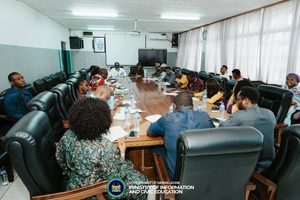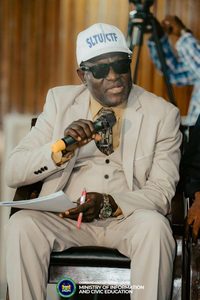
As public discussions continue to focus on debt and staff arrears at Sierratel, the Minister of Communication, Technology and Innovation, Madam Salima Bah, is redirecting attention to the technical roots of the crisis and the path toward recovery.
According to the Minister, Sierratel’s decline is not only a financial issue but also a technology failure that requires a technology-driven solution. She traced the turning point to 2014, when the company’s network was upgraded to CDMA technology at a time when the global telecommunications industry was shifting toward GSM.
“The manufacturer made it obsolete. They stopped producing CDMA equipment. That became the start of the challenge Sierratel faced,” she explained.
This decision left the company operating on a system with limited support, no spare parts, and no clear upgrade path. As CDMA technology was phased out globally, Sierratel’s services weakened, customers migrated to other networks, and revenue declined sharply.
Today, the company faces over $35 million in external debt and approximately $6.3 million in staff liabilities, reflecting the depth of the crisis.
Despite these challenges, Minister Bah is working on a complete reset of the system, focusing on modernization rather than managing decline.
Her ministry’s approach is centered on three key priorities: Addressing technical and financial challenges, investing in a modern and reliable network infrastructure,
restoring public confidence in Sierratel’s services.
Options under consideration include migration to 4G/LTE technology, expansion of fiber connectivity, and forming strategic partnerships to bring in technical expertise while maintaining government ownership.
The broader goal is to transform Sierratel into a functional national asset that supports e-government services, education, and healthcare systems.
Minister Salima Bah focuses on a recovery plan that also prioritize the welfare of workers. With millions owed in staff arrears, she maintains that employees remain central to the company’s revival.
“Technology does not run itself. You need the people who kept this network alive under difficult conditions,” she stated.
Despite its current challenges, Sierratel still holds valuable infrastructure, including network towers, spectrum, and nationwide reach, particularly in underserved rural areas.
For a country focused on digital transformation, these assets are critical. Reviving Sierratel could strengthen connectivity in areas where private operators have limited presence, supporting broader national development goals.
The Communication Minister’s approach signals a shift in strategy, from crisis management to long-term recovery and innovation.
By identifying obsolete technology as the core issue, the government is now positioning itself to implement solutions that align with global standards and future demands.
For now, Madam Salima Bah is on the brink of a solution because she has named the problem correctly. The next step is delivery.
 Stratcom Unit – MOICE